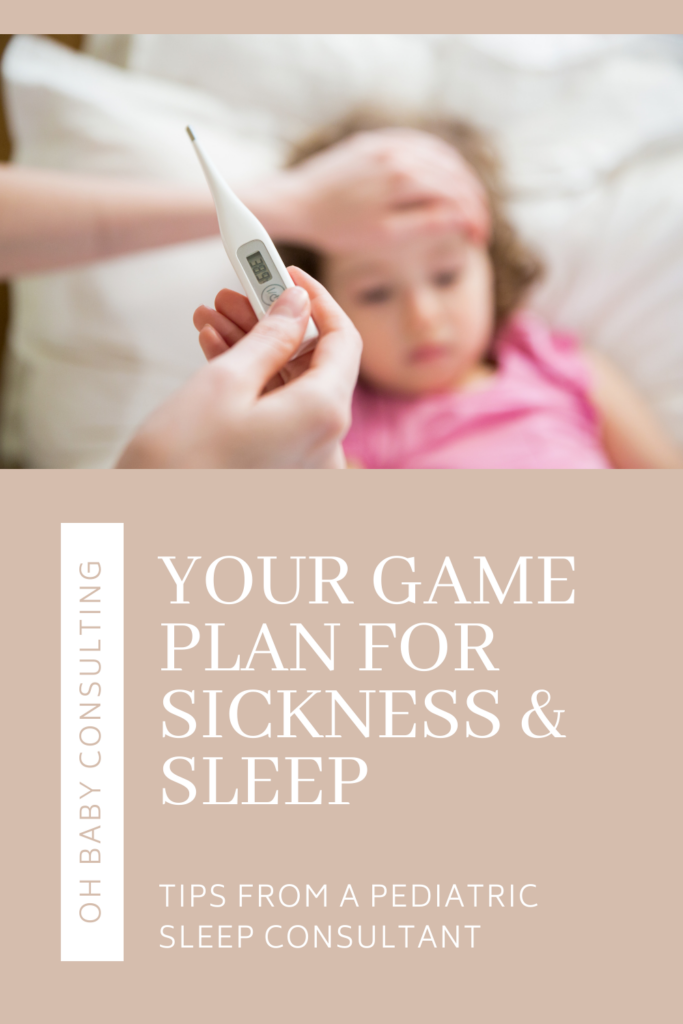
Nothing can throw a wrench in a good sleeper like sickness can! And with the frequency that babies and toddlers are sick, it might feel like your good sleeper is always regressing. But even though sleep is frequently disrupted when we’re under the weather, it’s incredibly important to get enough of it! Research shows that getting enough sleep boosts our immune systems which helps us fight off sickness. But getting good sleep doesn’t come as easily to a sick baby, so here are some recommendations for keeping sleep on track when your baby is sick.
Disclaimer: The following suggestions are for informational purposes only and are not meant to be substituted for recommendations made by your child’s pediatrician or other trusted medical provider. Please follow your gut and the advice of your doctor when determining appropriate care practices.
[This post contains some affiliate links but all product recommendations and opinions are my own. If you use these links to buy something, I may earn a small commission which in turn supports my work.]
Maintain your normal bedtime/nap routines
The familiarity and comfort in having their normal routines in place will help your child prepare their brain & body for the task at hand: sleep! Especially when they aren’t feeling well, a familiar routine can be incredibly settling.
Allow for some extra sleep
Sleep is great medicine, so we want your little one to get as much of it as they are able to. But that being said, we don’t want to let them sleep too much – especially during the day – because hydration & calories are equally important! You can allow your child to sleep a bit later in the mornings (especially after a rough night) do an earlier/longer/extra nap, and even move up bedtime, but make sure your little one has enough sleep pressure to maintain their 11-12 hour night where many immune boosting processes occur. Night sleep is most restorative, so we want to prioritize that over napping all day.
Treat the symptoms
Your sick little one may be pretty uncomfortable, so speak with your pediatrician about what you can do to make them feel well enough to both eat & sleep well. Whether that’s a pain reliever for earaches, teething, or fevers; saline drops or the Nose Frida for stuffiness & congestion; humidifiers or steam showers for coughing; or electrolyte drinks for dehydration, make sure you’re staying on top of the symptoms to keep your little one most comfortable.
Speak to your pediatrician about (re)offering night feeds
If your little one is struggling to get liquids in during the day or is vomiting/having diarrhea, it might be important to plan for night feeds to maintain hydration.
Decide whether your help is necessary…
If your baby has been sleep-trained for some time, and/or their sickness isn’t that severe, it’s highly possible that they won’t actually need extra help getting to sleep. Make sure their symptoms are at bay, offer the usual amount of comfort, and let them fall asleep the way they know how!
…but don’t stress about offering extra help if your child needs it
But if you’re on the other end of the spectrum and your little one is struggling hard to get to sleep, that’s okay too! Remember that sleep is vitally important as their body works to recover, so if your child is needing a little extra to get to sleep at bedtime or in the middle of the night, don’t stress about giving them that support in the moment.
Monitor them from their sleep space, not yours
I know it’s tempting to pull your little one into your bed to keep them close when they’re under the weather, but instead of moving them into your sleep space, bring an air mattress or sleeping bag into their room and camp out on the floor. We all sleep best in our own space and babies/toddlers are no different. They need deep, restorative sleep to recover quickly, so bed-hopping and co-sleeping can lead to more sleep struggles.
And bonus: your little one will have an easier time hopping back on track with their great sleep habits when they’re feeling better!
When your child feels better, get back to basics
If you created some unintentional or unsustainable habits when your child was sick that were necessary at the time but have become unhelpful now that they’re feeling better, know that you may have to do a small amount of retraining to remind your little ones of the expectations at sleep times and the skills they already possess.
Assuming your little one is back to their normal selves and are no longer uncomfortable, re-implement the sleep training method you used initially. Be mindful that your child may be quite a bit older than when you initially sleep trained and may do better with a different method (i.e. if you did a lot of intervention during sleep training at 4 months, your 18-month-old may not respond as well and would do better with a more hands-off approach.) Remember that you aren’t re-teaching them how to sleep – they already possess the skill – you’re just reminding them of the boundaries & expectations that may have shifted when they were sick.
If you're not sure how to approach this process, please reach out & let's get you a plan of action to get sleep back on track!
If you are struggling to get back on track after a particularly rough illness or your little one wasn’t the best sleeper to begin with, please reach out! Let’s work together to keep your little one as healthy as possible by making sure that they’re getting all the sleep they need.